|
|
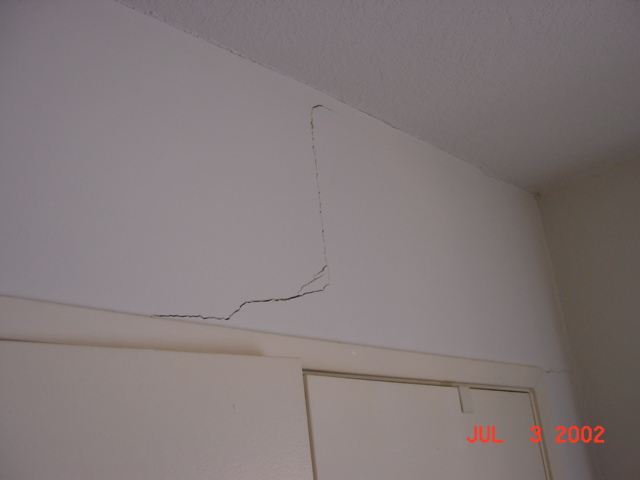
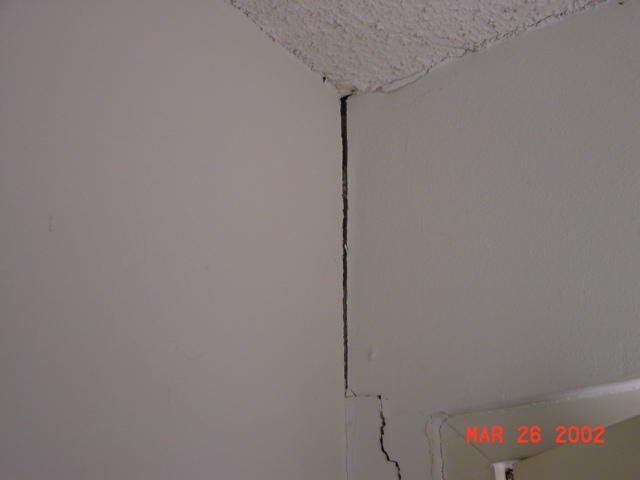
Often after a major earthquake, cracks develop in the walls and ceilings of the structure and perhaps in its foundations and floor slabs. Depending on their width and location, these cracks may be significant. They may be indicative of much more serious problems such as lack of shear bracing in the structural framing, unstable slopes, or seismically unstable ground. Older structures that have not been seismically retrofitted, frequently lack shear bracing in their walls. Some slopes, particularly older slopes, may be statically stable but become unstable due to earthquakes. Liquefaction, seismic softening, seismic settlement, and lateral spreading of seismically unstable ground can result in settlement and cracking of the structure.
Crack Above Closet Crack at the Junction of Two Walls

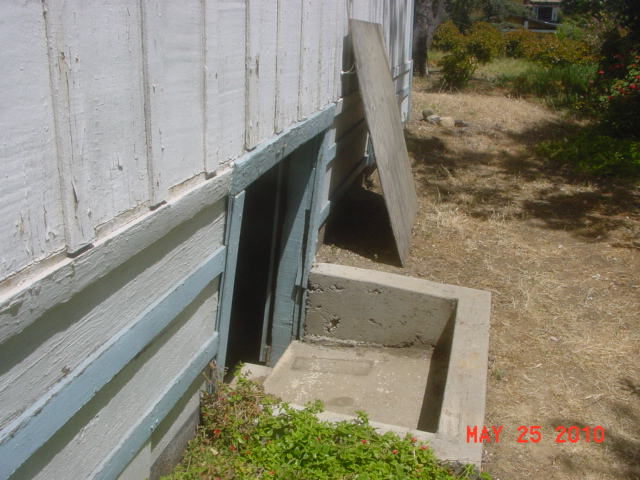
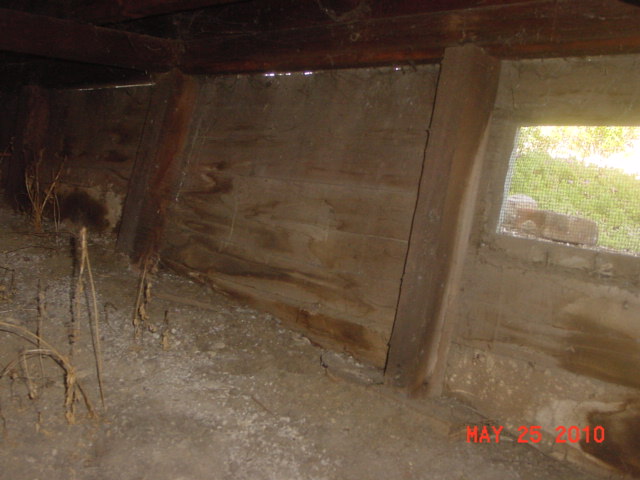
Leaning Foundation Cripple Wall LA House with no concrete foundations
or shear walls
Digital photographs of various areas of the property are taken during the inspection to document the cracking of the structure and its foundations or any retaining walls. The levelness of the structure is measured using precise digital equipment and a floor level survey is prepared. The data gathered indicate to us whether or not the structure is essentially level or that the structure has racked (plastic deformation) due to earthquake shaking.
Upon completion of the inspection, we will make a verbal presentation to you describing the condition of the structure or the retaining walls inspected and provide you with conceptual repair recommendations. Typically, within 2 to 3 days, a written report of our findings, floor level survey, and recommendations along with a copy of selected photographs taken during the inspection is faxed, emailed, and mailed to you.
Home Page
|
|